

What the trip is
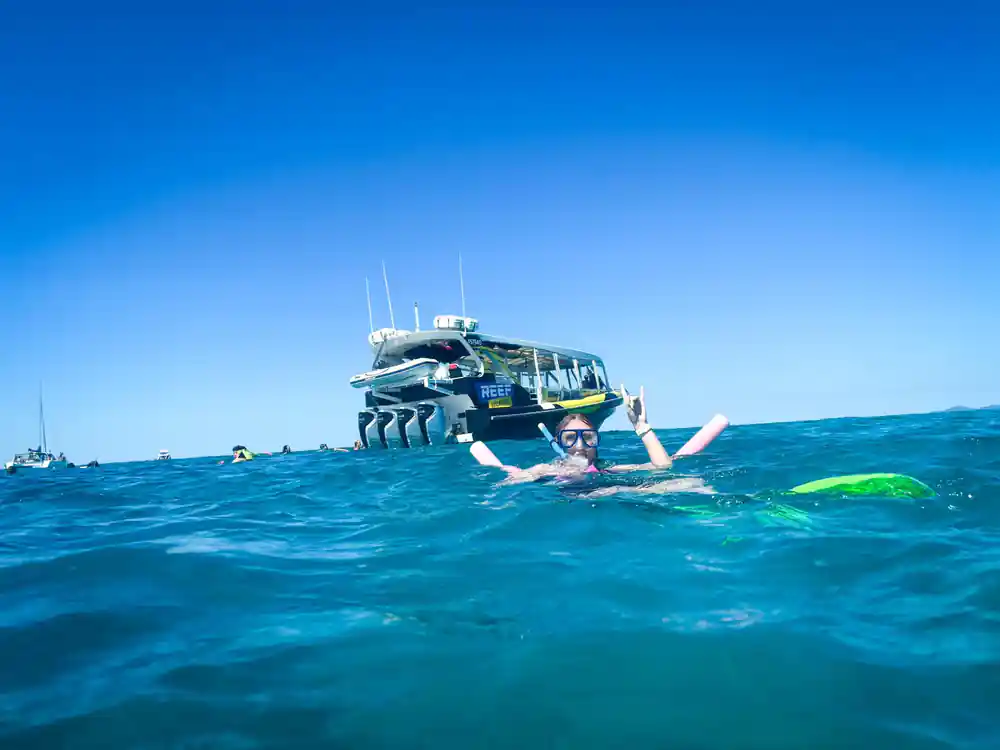
A fast vessel runs four hours out of the Marlin Marina in Cairns to the World Heritage listed reef, carrying no more than twenty seven people. Ninety minutes of guided snorkelling follows, at whichever of two reef sites suits the day, and you pick from three sailing times.
The shape of it is deliberate. This is not a full day built around a pontoon, and it is not a diving expedition. It is a compact reef trip built around getting you into the water quickly, keeping the group small, and having somebody experienced beside you while you are in it.
What that leaves you with is a morning or an afternoon on the reef rather than a whole day committed to one thing, in a part of Australia where there is a great deal else worth doing.
Great Barrier Reef snorkeling with a cap on numbers
Twenty seven is a genuinely small number for a reef boat. The larger operators out of Cairns run vessels carrying well over a hundred, often to a moored pontoon shared with other boats, and the experience at the site reflects that.
A guest here who had done a pontoon trip and an island trip earlier in the same week describes expecting something similar and finding it entirely different. That is the cap doing its work rather than any claim about the reef itself.
It also changes what the guides can do. With a group this size they are in the water with you, pointing things out, keeping an eye on the nervous swimmers and moving people towards whatever has just appeared.
Barrier reef snorkelling Cairns and the two sites
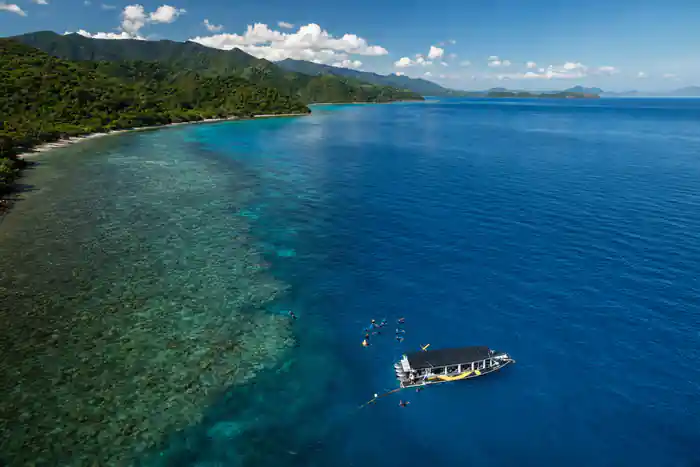
The boat runs to one of two reef sites rather than a fixed single location, which means the choice can be made against the conditions on the day rather than against a timetable.
That flexibility matters more on the reef than people expect. Wind direction and swell change which sites are comfortable and which are worth being at, and an operator with options can use them.
Both sites are outer reef rather than inshore, which is the distinction that decides coral health and visibility. This is the actual Great Barrier Reef rather than a fringing reef off an island close to the coast.
Ninety minutes in the water, guided
An hour and a half is a long time in the water for a half day trip, and the guiding is the part guests write about most. The snorkel guides are in the water with the group, not standing on the deck watching.
For a confident snorkeller that means being shown where the good coral is rather than swimming in circles looking for it. For a beginner it means never being alone, which several first-time guests describe as the reason the day worked at all.
The guides identify what you are looking at as you look at it. Guests write about learning the names of fish, corals and clams from people who were genuinely enthusiastic about them rather than reciting a list.
Cairns barrier reef snorkeling and the photographs
GoPro photographs are included at no charge, and they solve the single most common frustration of snorkelling. Almost nobody has an underwater camera, and the thing everybody wants afterwards is a picture of what they saw.
The crew take them during the trip and hand them over afterwards. Guests describe going home with photographs of turtles to show family, and one notes that for people who cannot take their own pictures this changes the whole proposition.
It is a small inclusion that has an outsized effect on how people remember the day. A reef trip without photographs is a memory. One with them is something you can show somebody.
Who it suits and who it does not
The operator is direct about this and lists twelve conditions under which the tour is not suitable, including an upper age limit of sixty five, back and heart problems, respiratory issues, low fitness and being a non-swimmer.
That list is longer and stricter than most, and it is worth reading before booking rather than after. Snorkelling from a fast boat in open ocean is described plainly by the operator as a strenuous activity.
What it does suit is a reasonably fit swimmer of any experience level, including complete beginners. The review record is full of people who had never snorkelled before and describe being carefully looked after throughout.
The crossing and the conditions
The vessel is fast, which is how a four hour trip reaches the outer reef and still leaves ninety minutes in the water. On a calm day the run out is straightforward and enjoyable.
On a rough day it is livelier, and the trip still runs. Guests describe choppy crossings handled well by the skipper, with one calling it a rollercoaster that nevertheless felt entirely safe. If you are prone to seasickness this is worth taking seriously in advance.
The reef itself is generally calmer than the crossing, since the reef structure takes the swell out of the water you are actually snorkelling in. Getting there is the bumpy part; being there usually is not.