The main points
- The Great Barrier Reef hosts six of the world's seven marine turtle species, giving turtle snorkeling near Cairns very good odds.[1]
- This half-day snorkelling tour lasts 4 hours and is priced from US$125, with English-speaking instruction and flexible booking.[2]
- Plan around the seasons: the dry season runs roughly May to October, the wet season roughly December to March.[3]
- Over 1,600 species of fish and over 600 species of corals live on the reef, along with reef sharks, giant clams and other curious characters.[1]
- Reef boats depart from the Reef Fleet Terminal at 1 Spence Street, Cairns.[4]
- Top choice Half-Day Snorkel from US$125 Duration4 hours[2]Rating4.73 from 1,768 reviews[2]CancellationFree cancellation up to 24 hours[2]ExtrasEnglish-speaking instructor[2] Check availability
- Kuranda by Train and Skyrail from US$144 Duration7 hours[5]Rating4.59 from 3,599 reviews[5]CancellationFree cancellation up to 24 hours[5]ExtrasPickup included[5] See this tour
- Reef Hopper Scenic Flight from US$202 Duration40 minutes[6]Rating4.81 from 545 reviews[6]CancellationFree cancellation up to 24 hours[6]ExtrasPickup included[6] See this tour


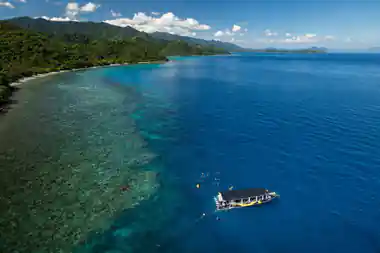
This living icon boasts over 1,600 species of fish, over 600 species of corals and a wide range of iconic marine creatures including six of the world’s seven species of marine turtle .
A simple, well-priced half-day for your Cairns turtle snorkeling
Ahead of the trip
Getting there and staying safe
Are there turtles in the Great Barrier Reef?
Yes. Among the Great Barrier Reef's residents are six of the seven marine turtle species found worldwide; these range from green turtles that feed on seagrass to hawksbills that move across coral gardens.[1] Running along the northeast coast for more than 2,300 kilometres, this reef system is composed of some 3,000 separate coral reefs.[9] For a Cairns turtle snorkeling trip, the practical question is often less 'will I see a turtle?' and more 'how much time do I have in the water?'
A half-day tour keeps it simple. This one runs for 4 hours, includes an English-speaking instructor, and is priced from US$125.[2] You can book now and pay later, and as long as you cancel 24 hours or more before departure you'll receive a full refund; that helps when the tropical weather does its own thing.[2] The tour departs from the Reef Fleet Terminal at 1 Spence Street, Cairns, the usual starting point for reef boats in the city.[4]
Morning and afternoon windows both have their charms. Morning water is often calmer, with better light for spotting shapes below the surface. Afternoon trips can be warmer and more relaxed. With a 4-hour itinerary, you still have the rest of the day free for the Cairns Esplanade, the rainforest markets, or a stroll along the waterfront.[2]
The reef sharks
Reef sharks are part of the same ecosystem. On the outer reef you may see white tip reef sharks resting in sandy gutters or black tip reef sharks cruising over the flats. They are usually shy and not interested in snorkellers.
The key is calm, slow movement. If a shark does appear, keep your hands in, watch from a respectful distance, and let the instructor decide when to move on. The half-day format is short, and the time you spend in the water is generally more focused than on a full-day trip.
Sharks tend to show themselves when the reef is quiet. Small groups and early starts help, but on a half-day trip from Cairns you simply take what the reef offers. Being relaxed in the water makes any shark sighting feel like a gift rather than a worry.

A green turtle glides over a sunlit coral garden on a half-day Cairns reef trip.
Great Barrier Reef fish and the small things
The fish list is remarkable. The Great Barrier Reef is home to over 1,600 species of fish and over 600 species of corals.[1] Around an inshore reef you might see clownfish tucked into anemones, parrotfish scraping algae from dead coral, fusiliers turning in a silver cloud, and schools of sardines flashing through the shallows.
Small things matter too. Cleaner wrasse set up stations where larger fish wait to be picked over, and tiny crabs hide among branching coral. The more slowly you swim, the more you notice. With an English-speaking instructor on the tour, you have someone to point out what is easy to miss.[2]
Look down, then look again. Many fish hide in the nooks beneath plate coral or in the spaces between staghorn branches. A few seconds of stillness can turn an empty-looking patch of reef into a busy scene. The half-day trip is long enough to let this happen without feeling rushed.[2]
Giant clams
Giant clams sit partly buried in the reef, their mantles in blues, greens, purples and gold. They close quickly if a shadow passes over. The trick is to hover gently and watch from above rather than reaching down. A big clam feels like a quiet monument on the sand.
On a snorkel tour you rarely need to dive deep to see them. They often sit in shallow sandy patches between coral bommies. The half-day trip gives you a focused window to look for them without the tiredness that can set in on a longer day.
from US$125
4-hour half-day tour from Cairns, English-speaking instructor, pay later option, free cancellation up to 24 hours.[2]
The coral itself
The coral is not just scenery. It is the reef's structure, food source and nursery all at once. Recent monitoring on the northern Great Barrier Reef reports that hard coral cover increased from 30.0% in 2025 to 35.1% in 2026.[10] Average water temperature on the reef off Cairns is 29°C in summer (December to February) and 24°C in winter (June to August).[7]
In the water, coral presents as staghorn thickets, brain corals, plate corals and soft fans that bend with the swell. Colour comes from the algae living inside the coral tissue. On a bright day, the light makes the gardens glow. The reef itself runs more than 2,300 kilometres along the coast.[9]
To see coral at its best, give yourself time to float over one bommie and watch the detail. The living surface has polyp patches, feathery tentacles and tiny mouths that open and close. This is the part of the reef that tells you whether the system is healthy, and the recent increase in hard coral cover on the northern reef is a hopeful sign.[10]
Dolphin whale watching and other visitors
Dolphins and whales pass through these waters too. Humpback whales migrate along the coast, and dolphins sometimes ride the bow wave of reef boats. Dugongs are shyer and usually seen in the seagrass beds closer to shore. There is no guarantee of a sighting, which is part of what keeps it exciting.
Dry season runs roughly May to October, bringing clearer skies and calmer mornings.[3] Remember that marine stinger season in tropical Queensland typically runs from November through to May, when risk from dangerous jellyfish is higher.[8] Wearing a stinger suit when offered is simple insurance.
If dolphins do appear, they usually move fast. Keep your mask on and watch the surface, not the reef. Whales are more often heard than seen, so a quiet breath and a moment of stillness can make the difference. The reef is full of surprises, and the half-day format still leaves room for them.
How much you see depends on the guide
A guide can make the difference between a pleasant swim and a trip you remember for years. The tour includes an English-speaking instructor, and you can focus on watching turtles, reef sharks and fish rather than navigating.[2] Listen to the briefing, ask about the animals you most want to see, and follow the shapes of the reef as the instructor points them out.
The practical details are easy to manage. The tour takes 4 hours and is priced from US$125, with free cancellation up to 24 hours in advance and the option to reserve now and pay later.[2] Meet at the Reef Fleet Terminal at 1 Spence Street, Cairns.[4] Bring sunscreen, a rash vest, and a sense of patience; wildlife does not run to a schedule.
What you see on any single reef visit depends on currents, light and pure luck. A good guide and a sensible itinerary keep the odds in your favour. With half a day on the water, a decent pair of eyes, and a willingness to float quietly, you give yourself every chance of a memorable Cairns turtle snorkeling experience.
Reef trip durations from Cairns
Reef trip prices from Cairns
Adult from-prices in US dollars: from US$125[2], from US$139[11], from US$163[12], from US$137[15]. Child rates are not published in the tour facts.
When to book your Cairns turtle snorkeling trip
Plan your half-day
Choose your date
Check availability for starting times and pick a morning or afternoon that suits your Cairns plans.[2]
Meet at the terminal
Head to the Reef Fleet Terminal at 1 Spence Street, Cairns, where reef tours depart.[4]
Prepare for the water
Pack sunscreen, a rash vest and a sense of adventure; remember stinger season runs November to May.[8]
Listen to the instructor
An English-speaking instructor will help you make the most of your time in the water.[2]
Keep your options open
If your plans change, you can cancel up to 24 hours before for a full refund, and the booking can be made now with payment later.[2]
Book your Cairns turtle snorkeling half-day adventure
from US$126Reserve now & pay later