The main points
- The Cairns dry season runs from May to October, while the wet season runs from December to March.[1] A rough day can happen in either, but the forecast tells you more than the calendar.
- Look at wind and sea state before boarding. Some outer reef pontoons sit 47 km offshore, so you want a window with manageable seas.[2]
- Settle amidships, keep watching the horizon, and alert the crew if you become unwell. The vessel is stable, but open water can still move, and the crew deals with this every day.
- On a windy or rainy day, surface chop can reduce visibility from the boat. On an overcast day, colours can look slightly muted because less sunlight reaches the coral, though the fish and coral remain the main show.
- If you cancel this half-day trip at least 24 hours before departure, you will receive a full refund.[3] That gives you room to wait for a better forecast.
| Season | Conditions | Reef advice | |
|---|---|---|---|
| Dry season | May to October[1] | Sunny skies, low humidity | Water averages 24°C[4] |
| Wet season | December to March[1] | Hot, humid, possible thunderstorms[1] | Water averages 29°C[4] |
| Stinger season | November to May[5] | Higher jellyfish risk[5] | Wear a stinger suit if offered[5] |
| Peak rainfall | January to March[1] | Most rainfall of the year[1] | Thunderstorms and cyclones possible[1] |
The majority of Cairn's rainfall occurs during summer between January and March. The monsoon trough is close to Cairns from December to March bringing with it warm to hot, humid conditions and the possibility of thunderstorms and tropical cyclones.
A rough forecast should not automatically stop you
Ahead of the trip
What a rough day actually means
A rough day on the Great Barrier Reef usually means wind, swell or rain, not danger. The Cairns dry season runs from May to October while the wet season runs from December to March.[1] In the wet season you can get short, sharp thunderstorms and tropical cyclones are possible, but the sea is not always rough just because rain is falling. The forecast that matters most is the marine wind and sea state, not the simple rain symbol. Understanding what a rough day looks like will help you read the forecast with more confidence and avoid cancelling a trip that would have gone ahead anyway.
If you are booked on a half-day reef trip, the total time on the water is 4 hours, so even a bumpy start can settle quickly once the boat reaches a sheltered reef anchorage.[3] Some outer reef pontoons sit 47 km offshore, which means you have time to settle in before the snorkelling begins.[2] You will also have an English-speaking instructor on board, so there is always someone to ask about the conditions ahead.[3]
Cairns Great Barrier Reef weather and why the reef is calmer
The Great Barrier Reef is a vast system, spanning more than 2,300 kilometres along the northeast coast of Australia and made up of some 3,000 individual coral reefs.[7] Many operators shelter behind cays and reef edges, which can make the water feel calmer than the open crossing. Green Island, for example, is 27 kilometres off Cairns and around 45 minutes away by catamaran.[8] A sand cay like Vlasoff Cay is reached from Cairns by a 20-minute helicopter flight each way.[9]
Because the reef itself breaks up the swell, rough weather at the departure terminal does not always mean rough water at the reef. The boat may rock on the way out, then find a protected lee once it arrives. That is why experienced travellers check the forecast but do not cancel the moment they see a cloud icon. Even on a day when the outer water looks lumpy from the shore, the actual snorkel sites can be calm and clear enough for a comfortable first reef experience.

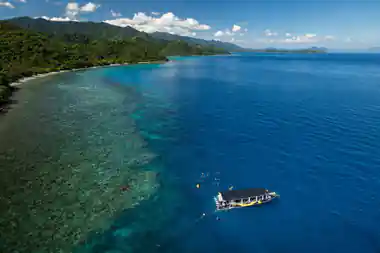
A reef vessel moored in clear water with coral visible from the surface.
Barrier reef weather forecast and what to check
Before you look at a Cairns weather forecast, look for three things: wind speed, swell height and the timing of any rain. The wet season, December to March, brings heat, humidity, and the chance of thunderstorms; the dry season, May to October, offers more sun and drier air.[1] In the marine stinger season from November to May, jellyfish risk is higher, so plan to wear a stinger suit if offered.[5]
On a half-day trip, departure time matters. Morning trips often have flatter water before sea breezes build. Check the forecast in the evening and again that morning; if it remains genuinely uncomfortable, use the free cancellation option up to 24 hours before departure.[3] The tour runs from Cairns with an English-speaking instructor.[3] A little planning goes a long way: if the wind is forecast to ease by midday, a morning departure might still be the better choice, whereas an afternoon trip could catch the worst of the sea breeze.
If you are prone to seasickness
If you know you get seasick, plan ahead. Choose a seat near the middle of the boat where movement is least, keep your eyes on the horizon, and avoid a heavy meal right before boarding. Some travellers take motion sickness tablets the night before and again in the morning, but ask a pharmacist or doctor what works for you. Staying hydrated and getting a good night's sleep will also help your body cope with the motion.
It also helps to remember that a rough crossing does not last the whole trip. The vessel is heading to reef sites where the water is often calmer. Tell the crew when you board; they are used to helping nervous passengers find the best spot and can offer practical advice. Once you are in the water with your mask on, the movement of the boat becomes much less noticeable, and most people find the snorkel itself the easiest part of the day.
There is no shame in deciding the ocean is not for you today. Listen to your body and to the crew. If you wake up feeling unwell, or the harbour looks genuinely hostile, choose another day. The reef will still be waiting when conditions settle, and a calm mind makes for a far better first snorkel. Morning seas are often gentler, so booking an early departure is one of the simplest ways to stack the odds in your favour.
from US$125
This half-day tour from Cairns is a Great Barrier Reef snorkelling tour with a 4-hour duration, and cancellation is free up to 24 hours before departure.[3]
What helps on the boat
Dress for the conditions. Even on a sunny day, wind over the deck can feel cool, so bring a light layer. Sunscreen, a hat and sunglasses are essential because glare off the water is intense. If it is the marine stinger season from November through to May, wear a stinger suit if one is offered, as jellyfish risk is higher in those months.[5] Winter reef temperatures average 24°C (June to August), while summer ones average 29°C (December to February); that warmth usually means you can swim comfortably without a wetsuit.[4]
A reef trip of half a day is short enough that you need very little. The focus is snorkelling, and there is an English-speaking instructor on board.[3] Keep your gear in a small dry bag, listen to the safety briefing, and stay hydrated. If you feel unwell at any point, say so early rather than trying to tough it out. A calm mind and a settled stomach make the whole experience far more enjoyable.
Another small habit that helps is moving slowly as you get up and down on the boat. Decks can be wet and the boat can shift with the swell, so use handrails, keep one hand free, and take your time. If you are not a strong swimmer, tell the crew before you get in the water. They can fit you with a flotation aid and keep you close to the group. A relaxed entry almost always leads to a better snorkel.
Does the weather affect what you see
Weather changes what you see from the surface more than what you see underwater. On an overcast day, colours can look slightly muted because less sunlight reaches the coral. In clear, sunny conditions, the reef glows. The reef itself remains home to over 1,600 species of fish, over 600 species of corals and six of the world's seven species of marine turtle.[10]
Across the northern Great Barrier Reef, hard coral cover increased from 30.0% in 2025 to 35.1% in 2026.[11] The coral gardens you snorkel over are part of a living, recovering system. Rough weather may stir up surface chop, but once your mask is in the water, the fish and coral are still there. If you are lucky, you might also spot a turtle gliding past, which is one of those moments that makes the crossing worthwhile.
When it does not run
Safety comes before schedule, and the crew makes the final call on whether it is safe to head out. You can cancel this half-day trip from Cairns free of charge up to 24 hours before departure and get a full refund, allowing flexibility if plans shift.[3]
If the weather rules out heading out, Cairns has plenty of Plan B options. You can use the day to explore the city, visit a gallery or watch the weather roll in over the water. The reef will still be there tomorrow, and a change of plan can turn a missed trip into an easy day by the water.
Traveller ratings for Cairns reef trips
GetYourGuide traveller ratings for the Cairns trips compared here.[3][12][13]
Compare Cairns reef trip prices
From prices in USD for Cairns reef trips.[3][12][13]
Cairns reef seasons at a glance
Weatherwise planning
Check the forecast
Look at wind, swell and rain timing before you book a half-day trip.
Choose a morning departure
Mornings are often calmer before sea breezes build during the day.
Pack for the boat
Bring sunscreen, a hat, a light layer and any seasickness remedy you need.
Use flexible booking
Free cancellation up to 24 hours in advance means you can wait for a better forecast.[3]
Trust the crew
The captain and instructor make the final call on safety and conditions.
Book your Cairns half-day reef trip with free cancellation
from US$126Reserve now & pay later