The main points
- Anyone with heart, back or breathing concerns, plus low fitness or a history of seasickness, should talk to the operator before booking.
- For introductory scuba diving, the stated minimum age is 12 years old.[1] For snorkelling, check the operator's policy before booking with children.
- Off Cairns, the reef's average water temperature is 29°C in summer, dropping to 24°C in winter.[2] Stinger season typically runs from November to May.[3]
- This 4-hour half-day tour, priced from US$125, lets you cancel at no cost up to 24 hours ahead.[4]
- If you do not want to get in the water, a semi-submersible seats you one metre underwater in air-conditioned comfort.[5]
- Top choice Half-Day Snorkel from US$125 Duration4 hours[4]Rating4.73 from 1,768 reviews[4]CancellationFree up to 24 hours[4] Check availability
- Kuranda Self-Guided from US$144 Duration7 hours[6]Rating4.59 from 3,599 reviews[6]CancellationFree up to 24 hours[6] See this tour
- Reef Hopper Flight from US$202 Duration40 minutes[7]Rating4.81 from 545 reviews[7]CancellationFree up to 24 hours[7] See this tour


The minimum age for introductory diving is 12 years old.
The honest way to decide if you should snorkel
Know this first
The full list, stated plainly
Led by an English-speaking instructor, this half-day snorkelling tour from Cairns runs for 4 hours.[4] It is a full reef outing, not a quick float near the beach, so the question of who should come is a real one. The most useful way to think about it is to split the list into age, medical conditions and physical comfort. Age is the part people ask about first, yet the clearer line in the research is for introductory scuba diving, not snorkelling: the minimum age for an introductory dive is 12 years old.[1] That number is a helpful anchor, because it shows the operator treats age as a safety matter rather than a formality. From there, you can ask the same direct question about snorkelling and get an answer specific to the boat, the day and the child.
For snorkelling itself, the practical list is shorter. Anyone with concerns about their heart, back or breathing should raise them with the operator before booking. The same goes for anyone who is not confident in open water, has low fitness, or knows that boat motion makes them miserable. None of this means you cannot come. It means you should have an honest conversation first. Bring the conversation forward, ahead of payment and arrival. If you are organising a group, ask once for everyone, so each person can decide with the same information.
Cairns snorkeling age limit at both ends
At the younger end, the one specific number in the research applies to introductory diving, where the minimum age is 12 years old.[1] Snorkelling is often possible for younger children, but that depends on the child, the conditions and the operator's own policy. Do not assume a child who can swim well in a pool will be fine in the open sea; ask what the operator recommends. A good operator will want to know the child's age, swimming confidence and previous time in the ocean. They may also ask which adults will be in the water with the child, because that changes the risk profile.
At the older end, the question is less about a number and more about fitness. A 4-hour reef trip means boarding, fins, mask clearing and getting back onto the boat.[4] Older travellers who are active and comfortable on the water may have no trouble. Those with heart, back or breathing conditions should get advice, not guess. It helps to picture the whole day: a ride to the reef, time in the water, and a return crossing. That context matters more than a birthday.

A sea turtle drifts above coral in the clear waters of the Great Barrier Reef.
Why back, heart and breathing are on the list
Snorkelling asks your body to do a few things at once: float, kick, look down, breathe through a tube and stay relaxed in moving water. That combination puts pressure on the lower back, the heart and the lungs. In summer, the average water temperature off Cairns' reef is 29°C; in winter, it's 24°C, and colder water can make some conditions less comfortable.[2] The body also works differently in salt water, with buoyancy changing how your joints and muscles are loaded. That can be a relief for some people, but for others it is unfamiliar, which is why an honest pre-booking conversation is useful.
A short briefing may not reveal a medical issue, so the responsibility sits with you. If you have a known condition, tell the operator before you book. They can tell you whether the trip is suitable and whether anything can be adjusted. The reef will still be there; there is no need to take a risk. No one on the boat wants you to be the person who discovers a limitation mid-snorkel. Sharing your history is not embarrassing; it is how planned trips stay safe.
Great Barrier Reef snorkeling age limit and low fitness
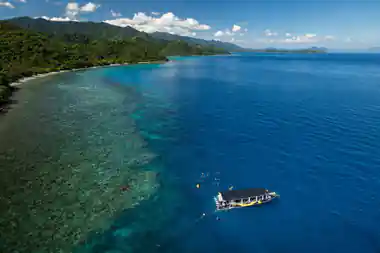
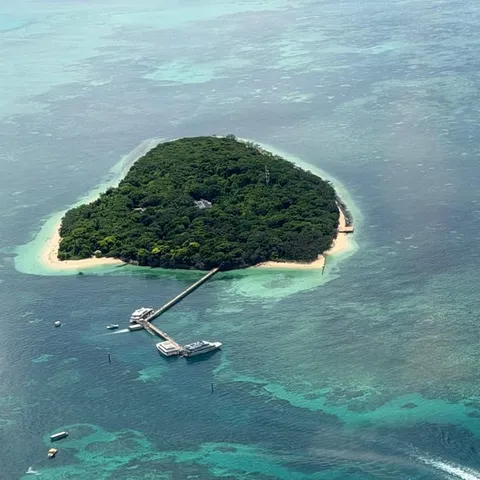
Low fitness is not the same as being too old. It is about how much energy you have for swimming against a light current, climbing a ladder and staying calm when you cannot touch the bottom. A pontoon base at Moore Reef is situated 47 km offshore and forms part of the Outer Reef.[9] The trip to an outer reef is a real stretch of open water before you even put a mask on. If you have not been in the ocean recently, you may find the mask, fins and gentle current use different muscles than a pool. Give yourself credit for the parts that take energy, and adjust your expectations.
The half-day format helps. Instead of a long day on a large vessel, this tour is 4 hours, which is enough time to get out, snorkel and return without turning the trip into a marathon.[4] If you are unsure, choose the shorter option and spend the rest of the day resting in Cairns. That is often the smarter plan; a calmer afternoon can leave you ready to try something tomorrow.
from US$125
Half-day tour from Cairns, free cancellation up to 24 hours, rated 4.73 by 1,768 travellers.[4]
Seasickness can be the real limitation
Seasickness is not always listed as a medical exclusion, but it is one of the most common reasons people cannot enjoy a reef tour. A boat journey is needed to reach the outer reef; at Moore Reef, a pontoon base sits 47 km from the shore, within the Outer Reef.[9] The transfer is a meaningful part of the trip; the half-day length matters more than it sounds. Motion follows weather, so check the forecast and ask the operator if the day has been calm so far. A change in wind can change the ride.
If you know you get queasy on boats, take your usual precaution before boarding and tell the crew. You can also choose a calmer day in the dry season, which is roughly May to October.[10] The point of an honest list is to make sure motion sickness does not come as a surprise. Some people do better with a light breakfast, a spot on the lower deck and their eyes on the horizon. Use what works for you, and let the crew know where you are sitting.
What to do if one applies to you
Start with the operator. Send a short message with your age, your health history and any medication you take, and ask whether the trip is suitable. If you prefer to stay dry, ask whether your boat has a semi-submersible. On one, you sit one metre underwater in air-conditioned comfort while the reef glides past.[5] Ask whether that option is available on your chosen boat. The semi-submersible is not a substitute for snorkelling, but it lets you see the reef clearly if you cannot get in the water.
You may book with confidence on this half-day tour, since cancellations made at least 24 hours beforehand qualify for a full refund.[4] That gives you room to plan around a health check, weather or a change of mind. There is no need to decide everything today. It also lets you check the forecast closer to the date. If a cold front or a rough sea is forecast, you can make a calm decision instead of a pressured one.
Why an honest list is a good sign
A tour operator that asks about age, health and fitness is not trying to turn people away. It is trying to keep everyone safe. The Great Barrier Reef is a wild place, and a trip that treats exclusions seriously will also treat its passengers seriously. That is a good sign, especially for first-time snorkellers. You want a crew that is comfortable saying no at the dock when the conditions are wrong, because that same judgment protects you in the water.
The reef is resilient: hard coral cover in the northern Great Barrier Reef increased from 30.0% in 2025 to 35.1% in 2026.[11] The same care that protects the reef can protect you. If one part of the list applies to you, work with the operator to find a safe way to see it. Ask about the day's plan, the number of people on board and where the crew positions itself during the swim. Small conversations turn a good trip into a comfortable one.
Traveller ratings on GetYourGuide
Ratings out of 5: half-day snorkel 4.73[4], all-inclusive half-day 4.85[12], Reef Hopper flight 4.81[7], Kuranda train and Skyrail 4.59[6].
Reef trip from-prices in US dollars
From-prices in US dollars: half-day US$125[4], all-inclusive US$139[12], Green Island half-day US$77[13]. Amounts are adult from-prices per person.
When to plan your trip
Know this first
Ask about your health
Mention heart, back, breathing or any condition that could make snorkelling harder. The operator can advise on whether the trip is right for you.
Check the age policy
For introductory diving, the minimum age is 12 years old.[1] If you are booking for a child, confirm the snorkelling age policy before you pay.
Plan for motion
A pontoon base at Moore Reef sits 47 km offshore on the Outer Reef.[9] If you are prone to seasickness, take your usual precaution and tell the crew.
Know the seasons
The Cairns dry season is roughly May to October; stinger season typically runs from November to May.[3][10] Choose the season that suits you.
Use the cancellation
For this half-day tour, free cancellation is available up to 24 hours ahead.[4] Book when you are ready and adjust if you need to.
Book your half-day Cairns snorkelling tour with free cancellation
from US$126Reserve now & pay later